
Best Time to Visit Prague: Weather, Events & Travel Tips
Prague rewards visitors who show up at the right time. The city is beautiful in every season, but the experience shifts dramatically depending on when you land. Crowds, prices, daylight hours, and the city’s own calendar all shape what your trip feels like on the ground. Here is what you need to know to pick the perfect window.
A Quick Look at Prague’s Seasons
Prague sits in central Europe, so it gets proper seasons. Summers are warm and busy. Winters are cold and quiet. Spring and autumn sit in between, and for most travelers, those shoulder months are the sweet spot.
| Season | Months | Avg. Temp | Crowd Level | Price Level |
|---|---|---|---|---|
| Spring | Mar-May | 8-18°C (46-64°F) | Moderate | Mid-range |
| Summer | Jun-Aug | 19-27°C (66-81°F) | Very High | High |
| Autumn | Sep-Nov | 7-17°C (45-63°F) | Moderate | Mid-range |
| Winter | Dec-Feb | -2-4°C (28-39°F) | Low | Low |
Those numbers tell part of the story. The rest comes down to what you actually want from a city break.
Spring: My Top Pick for Most Travelers
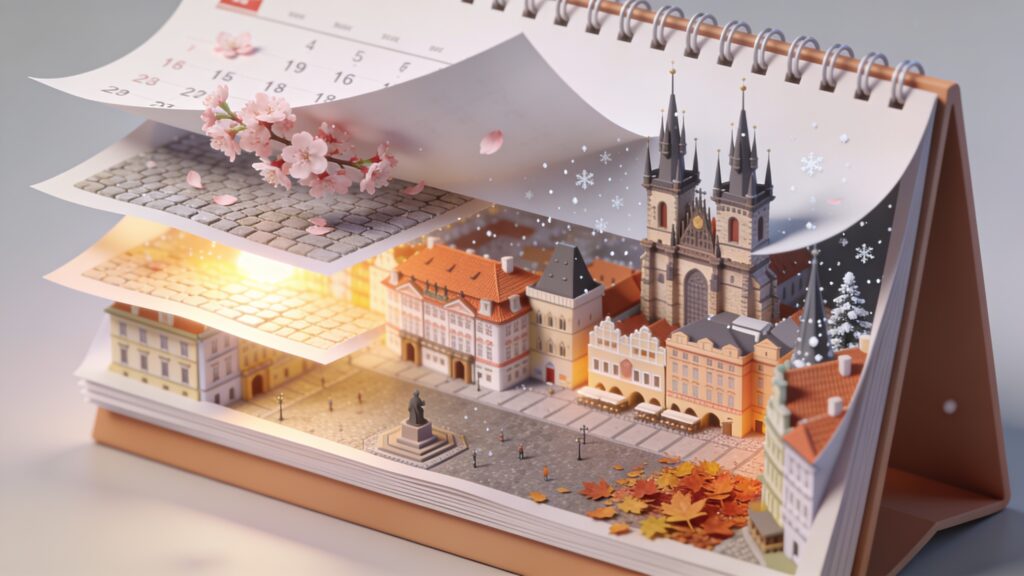
March through May is when Prague comes alive after a grey winter. Temperatures climb steadily, the beer gardens reopen, and the Charles Bridge looks spectacular with blossom trees framing it on clear days.
April hits the sweet spot. You get long daylight hours, manageable crowds, and prices that have yet to spike for summer. Easter Weekend is the one exception. The city fills up fast around Easter, so book accommodation at least six weeks ahead if you plan to visit then.
May can feel almost summer-like, especially in the second half of the month. The Prague Spring International Music Festival runs through May and early June, filling concert halls across the city with world-class classical performances. If you care about culture alongside sightseeing, May is a strong choice.
Summer: Peak Season With Trade-offs

June through August brings warm weather and a packed calendar. The Old Town Square stays crowded from morning to night. Restaurants along the tourist drag mark up their menus. You will queue for the Astronomical Clock, and you will queue again for the Prague Castle.
That said, summer has real upsides. The evenings are long and warm. Outdoor cinema events pop up across the city. Prague Pride, held in August, draws large crowds and brings an energetic atmosphere to the streets around Vinohrady.
My honest take: summer is fine if you book early and stay away from the most obvious tourist traps. Stick to neighborhoods like Žižkov, Vinohrady, and Holešovice for restaurants and bars, and you will enjoy a city that actually belongs to people who live there.
Autumn: Underrated and Worth Considering
September and October are the months I recommend to anyone who asks me directly. The summer crowds thin out after the school holidays end in late August. Prices drop. The light turns golden and warm in a way that makes Prague look almost impossibly photogenic.
October brings the Prague Signal Festival, a free light art event that transforms buildings and public spaces across the city. It draws big local crowds but stays manageable compared to summer tourism.
November is a harder sell. Rain increases, temperatures drop into single digits, and the city takes on a muted quality. If you travel in November, pack layers and lean into it. The outdoor Christmas markets start setting up in late November, which adds genuine warmth to the Old Town Square.
Winter: Cold, Cheap, and Atmospheric
December is a split month. The Christmas markets run from late November through December 23rd, and they are the real draw. The Old Town Square market and the Wenceslas Square market both serve svařák (mulled wine) and trdelník (chimney cake) from wooden stalls, and the whole city smells like cinnamon and roasted nuts.
December is busy around the markets but manageable. January and February are the quietest months of the year, and accommodation prices reflect that. A hotel room that costs 3,000 CZK per night in July might go for under 1,500 CZK in February.
Winter visits reward people who prioritize museums, galleries, and restaurant culture over outdoor sightseeing. The National Museum on Wenceslas Square, the Mucha Museum, and the DOX Centre for Contemporary Art all deliver without any weather dependency.
Practical Tips for Any Visit
A few things stay true regardless of when you travel.
- Book accommodation early if you visit over Easter, Prague Pride, or the Christmas market period. These windows sell out weeks in advance.
- Prague’s public transport is excellent. The metro, tram, and bus network covers the whole city efficiently. A 24-hour pass costs around 120 CZK and covers everything.
- The Czech crown (CZK) is the local currency. Card payments are widely accepted, but carry some cash for markets, smaller cafes, and tips.
- Wear comfortable shoes. Prague’s cobblestones are beautiful and brutal. After two hours on your feet in Old Town, you will understand.
- Tipping runs around 10% in restaurants. Round up taxi fares. Nobody expects more than that.
- Prague Castle opens early and closes at dusk. Go at opening time to beat the tour groups. The views over the city from the castle grounds justify the trek every time.
Key Takeaways
Spring (April and May) is the best overall window for a first visit. Autumn (September and October) is the best time if you want fewer crowds and lower prices. Summer delivers warmth and a full events calendar but requires more planning and more patience. Winter rewards budget travelers and people who want an intimate, quieter city with the added bonus of the Christmas market season.
Prague is a city that gives back what you put in. Come with a plan, pick your timing wisely, and you will leave with a city you want to return to.